This is why traditional AI training often fails in SMB environments. Courses assume dedicated time, technical focus, and structured progression. Real work rarely allows for any of that.
Yet SMB employees still build AI skills — not through formal programs, but through using AI while doing their actual jobs. When learning is embedded into real work, AI skills develop naturally, sustainably, and with far less resistance.
Understanding how SMB employees build AI skills through real work is key to making AI adoption stick.
Why Formal AI Training Misses the Reality of SMB Work
Most SMB employees wear multiple hats. Their days are shaped by urgency rather than schedules. Pulling them away for training often feels disruptive instead of helpful.
Even when training happens, it tends to be abstract. Concepts feel disconnected from real tasks. Without immediate application, new knowledge fades quickly.
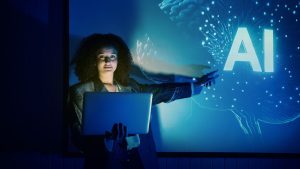
This is why on-the-job AI learning is an essential part of implementation. Employees learn when AI helps them solve a problem they already care about.
Relevance accelerates learning far more than instruction.
Real Work Creates Context That Training Cannot
AI skills are not theoretical. They are contextual.
An employee learns how to use AI effectively when they apply it to tasks they already understand. Writing reports, organizing information, summarizing updates, or preparing responses all create opportunities for learning.
Because the context is familiar, employees can immediately judge whether AI is helping or not. They adjust their approach, refine inputs, and develop intuition.
This feedback loop is what builds practical AI skills.
Learning Happens Through Repetition, Not Certification
SMB employees rarely need advanced AI knowledge. They need confidence and consistency.
Confidence develops when AI is used repeatedly in everyday tasks. Over time, employees stop thinking about “using AI” and start thinking about outcomes. AI becomes a support tool rather than a special skill.
Repetition turns experimentation into habit. Habit turns usage into capability.
This is how real skill development happens in SMB teams.
Why Hands-On Use Builds Better Judgment
AI tools are powerful, but they are not perfect. Employees must learn when to trust outputs and when to question them.
This judgment cannot be taught in theory. It develops through use.

As employees work with AI in real scenarios, they begin to notice patterns. They understand where AI excels and where it struggles. They learn how to guide it, validate results, and improve outcomes.
This practical judgment is one of the most valuable AI skills SMB employees develop.
The Role of Mistakes in Skill Development
Mistakes are part of learning.
In real work environments, mistakes provide immediate feedback:
- An output needs revision
- A summary misses context
- A suggestion feels off
When employees are allowed to learn without fear, these moments accelerate understanding. They refine how AI is used and strengthen trust in the process.
SMBs that normalize learning through doing create faster, more resilient AI skill growth.
Why Skill Sharing Accelerates Team Learning
In SMBs, learning spreads socially.
When one employee discovers a useful way to apply AI, others notice. Conversations happen organically. Techniques spread without formal instruction.

This informal sharing builds team-wide capability fast. Skills become shared rather than siloed.
AI learning becomes part of everyday collaboration.
Leaders Shape How Skills Develop
Leaders play an important role in how AI skills develop through real work.
When leaders participate, reinforce good usage, and treat AI learning as part of the job, employees engage more deeply. When leaders stay silent or uncertain, adoption slows.
Leadership does not need to provide technical answers. They need to create permission and encouragement to learn.
From Individual Learning to Team Capability
Early AI skill development often starts with individuals. Over time, the goal is shared capability.
This shift happens when:
- AI usage becomes visible
- Effective approaches are reinforced
- Learning is treated as collective progress
When teams learn together, AI skills become durable. They survive turnover and adapt as tools evolve.
Why Real Work Produces Sustainable AI Skills
Skills learned in isolation fade. Skills learned through real work endure.
Because real work changes constantly, employees adapt their AI usage continuously. They refine techniques as needs shift. They remain flexible as tools evolve.
This adaptability is what makes AI skills sustainable for SMBs.
Building an AI Learning Culture
SMBs need:
- Space to experiment
- Clear boundaries around responsible use
- Reinforcement of effective practices
When learning is embedded into daily work, culture evolves naturally. AI stops being intimidating and starts being useful.
The Bottom Line for SMBs
SMB employees build AI skills most effectively when learning happens through real work.
By embedding AI into everyday tasks, businesses enable hands-on learning that is practical, relevant, and sustainable. Skills develop organically. Confidence grows. Adoption sticks.
When employees learn AI while doing their jobs, AI becomes a natural part of how work gets done.